Table of Contents
Introduction
Your first driving lesson is an exciting milestone, but it’s completely normal to feel nervous before getting behind the wheel for the first time. Almost every experienced driver remembers the mixture of excitement, curiosity, and uncertainty they felt before their very first lesson. The good news is that proper preparation can transform those nerves into confidence.
Knowing what to expect during your first driving lesson helps you stay relaxed, learn faster, and enjoy the experience. Driving instructors understand that beginners have little or no practical experience, so they focus on teaching the fundamentals in a safe and supportive environment.
In this complete beginner’s guide, you’ll learn exactly how to prepare before your lesson, what to bring, what your instructor will teach first, and the most common mistakes new learners should avoid. Whether you’re a teenager earning your first license or an adult learning later in life, these practical tips will help you start your driving journey with confidence.
If you’re ready to begin learning, explore our driving classes to find the right program for your experience level.
Why Your First Driving Lesson Is Important
Your first lesson establishes the foundation for every driving skill you’ll develop in the future. Instead of immediately driving through busy streets, you’ll learn how the vehicle works, understand basic safety procedures, and begin developing good driving habits.
Professional instructors teach beginners step by step, allowing each new skill to build naturally on the previous one. This gradual approach helps reduce stress while improving confidence behind the wheel.
Skills You’ll Begin Learning
- Adjusting your seat and mirrors.
- Understanding dashboard controls.
- Proper steering techniques.
- Smooth acceleration and braking.
- Basic observation skills.
- Mirror usage.
- Road positioning.
- Vehicle awareness.
Learning these fundamentals correctly from the beginning makes future lessons much easier and helps prevent bad driving habits from developing.
For additional beginner driving safety information, review the educational resources available from the National Highway Traffic Safety Administration (NHTSA).
What to Bring to Your First Driving Lesson
Arriving prepared allows you to focus entirely on learning. Before leaving home, take a few minutes to make sure you have everything you need for your lesson.
Essential Items
- Your learner’s permit or driving license (if required).
- Comfortable shoes with thin soles.
- Glasses or contact lenses if you need them.
- A bottle of water.
- Your lesson confirmation or booking details.
- A positive attitude and willingness to learn.
What to Wear
Choose comfortable clothing that allows you to move freely while operating the pedals and steering wheel. Avoid heavy boots, high heels, flip-flops, or restrictive clothing that may reduce your control of the vehicle.
Simple, comfortable footwear helps you better feel the accelerator, brake, and clutch (if learning in a manual transmission vehicle).
How to Prepare Mentally Before Your First Driving Lesson
Many beginners worry about making mistakes. Remember that your instructor expects you to be inexperienced—that’s exactly why you’re taking lessons.
Your goal during the first driving lesson is not to drive perfectly. Instead, focus on listening carefully, asking questions, and learning one skill at a time.
Ways to Build Confidence
- Get a full night’s sleep.
- Eat a light meal before your lesson.
- Arrive 10–15 minutes early.
- Take a few deep breaths before starting.
- Don’t compare yourself to other learners.
- Accept that mistakes are part of learning.
Confidence grows naturally through practice. Every experienced driver once sat behind the wheel for the first time, and every lesson brings you one step closer to becoming a safe and independent driver.
What Happens During Your First Driving Lesson?
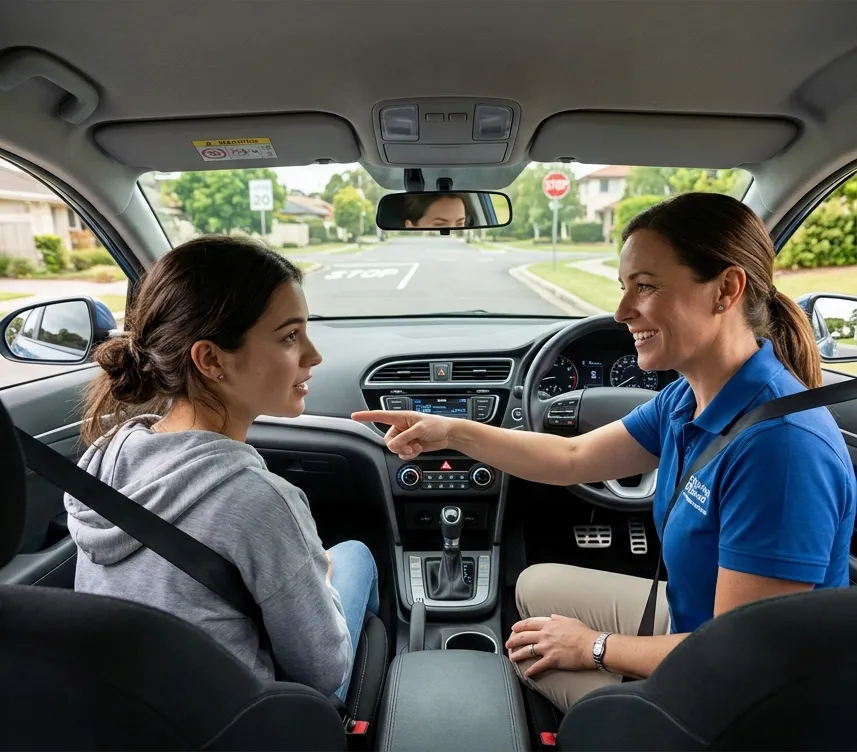
One of the biggest concerns beginners have is not knowing what will happen once they get into the driver’s seat. Fortunately, your instructor will guide you through every step of the lesson and explain each task before asking you to perform it.
Most instructors begin in a quiet residential area or an empty parking lot where you can become familiar with the vehicle before entering busier roads.
Your Lesson Will Usually Include
- Adjusting your seat, mirrors, and steering wheel.
- Learning the location of important controls.
- Starting and stopping the vehicle safely.
- Moving off smoothly from the curb.
- Basic steering techniques.
- Simple left and right turns.
- Understanding road positioning.
- Practicing observation and mirror checks.
Your instructor will not expect perfection. Instead, they’ll help you understand each step, offer constructive feedback, and gradually increase the level of difficulty as your confidence grows.
Common Mistakes Beginners Make During Their First Driving Lesson
Every new driver makes mistakes while learning. The important thing is to recognize them early and improve with practice rather than becoming discouraged.
Most Common Beginner Mistakes
- Looking directly in front of the vehicle instead of scanning ahead.
- Holding the steering wheel too tightly.
- Braking too suddenly.
- Forgetting to check mirrors regularly.
- Turning the steering wheel too much or too little.
- Feeling rushed by other traffic.
- Overthinking every movement.
- Becoming anxious after one small mistake.
Your instructor has worked with hundreds of beginners and expects these challenges. Mistakes are a normal part of learning and provide valuable opportunities to improve.
Tips to Learn Faster
Progress comes from consistency rather than perfection. The more relaxed and attentive you are, the more information you’ll retain from each lesson.
Build Good Learning Habits
- Listen carefully before asking questions.
- Practice regularly between lessons whenever possible.
- Review your instructor’s feedback after each lesson.
- Focus on improving one skill at a time.
- Watch educational driving videos from trusted sources.
- Be patient with yourself.
You can also explore our driving blog for additional beginner guides and practical driving tips that reinforce what you learn during your lessons.
For official driver education resources, visit the AAA Driver Education website, which offers useful safety information for new drivers.
How to Get the Most Out of Every Driving Lesson
Your first lesson is only the beginning of your driving journey. Developing safe habits from day one will make future lessons more productive and help you become a confident, responsible driver.
After Every Lesson
- Write down what you learned.
- Ask your instructor which skills need improvement.
- Practice with a qualified supervising driver if permitted.
- Review local traffic rules.
- Prepare questions for your next lesson.
Learning to drive is a gradual process. Each lesson builds on the previous one, so don’t worry if everything doesn’t feel natural immediately. Confidence develops through repetition, experience, and quality instruction.

What happens during a first driving lesson?
During your first driving lesson, your instructor will introduce you to the vehicle, explain the dashboard controls, help you adjust your seat and mirrors, and teach you the basics of steering, braking, and accelerating. Most lessons begin in a quiet residential area or an empty parking lot so you can build confidence before driving in heavier traffic. The lesson focuses on learning safely rather than testing your abilities.
Do I need any driving experience before my first driving lesson?
No. Your first driving lesson is specifically designed for complete beginners. Professional driving instructors expect you to have little or no practical experience. They’ll guide you through each step at a comfortable pace and explain everything clearly before asking you to perform any driving tasks.
What should I bring to my first driving lesson?
You should bring your learner’s permit or any required identification, wear comfortable clothing and flat-soled shoes, and bring glasses or contact lenses if needed for driving. It’s also a good idea to carry a bottle of water and your lesson confirmation. Arriving a few minutes early helps you start the lesson feeling relaxed instead of rushed.
Is it normal to feel nervous before a first driving lesson?
Absolutely. Feeling nervous before your first driving lesson is completely normal and happens to almost every new driver. Your instructor understands this and will create a calm, supportive learning environment. As you become familiar with the vehicle and practice basic skills, your confidence will naturally grow.
How long does a first driving lesson usually last?
Most driving schools schedule the first driving lesson for between 60 and 90 minutes, although lesson lengths vary depending on the driving school and location. During this time, your instructor will balance practical driving with explanations to avoid overwhelming you with too much information at once.
Will I drive on busy roads during my first lesson?
Usually not. Most instructors begin in quiet neighborhoods, industrial areas with light traffic, or large parking lots. Once you demonstrate basic control of the vehicle, your instructor may gradually introduce simple public roads. The goal is to help you build confidence before facing more challenging traffic situations.
What are the most common mistakes beginners make?
New drivers often grip the steering wheel too tightly, forget to check mirrors regularly, brake too suddenly, or focus only on the road directly ahead. These mistakes are expected during the learning process. Your instructor will identify these habits early and teach you how to correct them through regular practice.
What should I wear to my first driving lesson?
Wear comfortable clothing that allows you to move freely. Flat, closed-toe shoes with thin soles provide better pedal control than sandals, flip-flops, or high heels. Comfortable clothing helps you focus on learning rather than adjusting uncomfortable footwear or restrictive clothing.
How can I prepare before my first driving lesson?
The best preparation includes getting enough sleep, eating a light meal beforehand, reviewing basic road signs, and arriving with a positive attitude. Remember that you are there to learn—not to perform perfectly. Listening carefully, asking questions, and staying relaxed will help you learn more during each lesson.
How many driving lessons will I need before taking my road test?
The number of lessons varies for every learner. Some students become test-ready after 20 to 30 hours of professional instruction, while others benefit from additional practice. Factors such as previous experience, confidence, frequency of lessons, and individual learning pace all influence how quickly you’ll be ready for your driving test. Your instructor will monitor your progress and recommend when you’re prepared to take the exam.
Comparison: Arriving Prepared vs. Arriving Unprepared
Your experience during a first driving lesson can vary significantly depending on how well you prepare beforehand. While professional instructors are trained to work with complete beginners, arriving prepared helps you feel more confident and allows you to focus entirely on learning new skills.
Prepared Student
- Arrives early and feels relaxed.
- Brings all required documents.
- Wears comfortable clothing and suitable footwear.
- Listens carefully to instructions.
- Asks questions when unsure.
- Learns progressively without unnecessary stress.
Unprepared Student
- Rushes to the appointment.
- Forgets important documents.
- Feels distracted or anxious.
- Has difficulty concentrating.
- Becomes frustrated by small mistakes.
- Learns more slowly because of unnecessary stress.
Preparing before your lesson doesn’t require extensive knowledge of driving. Simple steps such as getting enough sleep, arriving early, and bringing the correct documents make a noticeable difference in your learning experience.
Image Suggestion
- Search Query: student arriving for driving lesson
- Recommended Source: Pexels
- License: Free Commercial Use
- SEO ALT: Student arriving prepared for a first driving lesson
Best Practices for Every Beginner Driver
Building good habits from your very first lesson makes learning easier and helps you become a safer driver. Professional instructors encourage beginners to focus on consistency rather than speed.
Practice Active Observation
Keep your eyes moving by checking mirrors regularly, scanning the road ahead, and watching for pedestrians, cyclists, and traffic signs. Developing strong observation skills early improves both safety and confidence.
Communicate with Your Instructor
If you don’t understand an instruction, ask for clarification immediately. Driving instructors expect questions and are happy to explain concepts in different ways until you feel comfortable.
Stay Relaxed
Many beginners grip the steering wheel too tightly or hold their breath when nervous. Take slow, steady breaths and remember that making mistakes is a normal part of learning.
Practice Consistently
Regular practice helps reinforce new skills. If local regulations allow, practicing with a qualified supervising driver between lessons can significantly improve your progress.
For additional beginner safety resources, visit the National Safety Council, which provides educational materials for new drivers.
Common Mistakes to Avoid Before and During Your First Driving Lesson
While your instructor doesn’t expect perfection, avoiding a few common beginner mistakes can make your learning experience smoother and more enjoyable.
Trying to Learn Everything at Once
Driving is a skill that develops over time. Focus on mastering one concept before worrying about more advanced techniques.
Looking Too Close to the Vehicle
Instead of staring directly in front of the hood, train yourself to look farther ahead. This improves steering accuracy and helps you anticipate traffic conditions.
Being Afraid to Ask Questions
If you’re confused about a maneuver or instruction, ask your instructor for clarification. Clear communication leads to faster learning.
Comparing Yourself to Others
Every learner progresses at a different pace. Some people become comfortable quickly, while others require additional practice. Consistent improvement matters far more than comparing yourself to friends or family members.
Building Confidence After Your First Lesson
Your first lesson is only the beginning of your driving journey. Don’t judge your ability based on a single session. Confidence develops through repetition, constructive feedback, and practical experience.
After each lesson, review what you’ve learned, celebrate your progress, and identify one or two areas to improve before your next lesson. Small improvements made consistently will lead to significant progress over time.
Understanding the Cost of Learning to Drive
Many beginners focus only on the price of individual driving lessons, but it’s important to consider the overall value of professional instruction. Quality lessons help you develop safe driving habits, reduce the likelihood of failing your road test, and may even save money by reducing the number of lessons you’ll need in the long run.
What Can Affect the Total Cost?
- The number of lessons required to reach test readiness.
- Your previous driving experience.
- Whether you practice between professional lessons.
- The type of vehicle (automatic or manual transmission).
- Your confidence and learning pace.
- Local licensing and road test fees.
While every learner progresses differently, investing in quality instruction often proves more cost-effective than rushing through the learning process or needing multiple road test attempts.
Before choosing a driving school, compare lesson packages, instructor qualifications, scheduling flexibility, and student reviews—not just the price.
Your First Driving Lesson Checklist
Use this simple checklist before leaving home to make sure you’re fully prepared.
- ✓ Bring your learner’s permit or required identification.
- ✓ Wear comfortable clothing.
- ✓ Choose flat, closed-toe shoes.
- ✓ Bring your glasses or contact lenses if needed.
- ✓ Carry a bottle of water.
- ✓ Arrive at least 10–15 minutes early.
- ✓ Silence your phone before the lesson begins.
- ✓ Stay positive and ready to learn.
- ✓ Listen carefully to your instructor.
- ✓ Remember that making mistakes is part of learning.
Completing these simple steps helps you begin your first driving lesson feeling calm, organized, and ready to focus on learning.
Conclusion
Your first driving lesson marks the beginning of an exciting journey toward becoming a safe, confident, and independent driver. Feeling nervous is completely normal, but proper preparation can turn uncertainty into confidence.
By arriving prepared, wearing comfortable clothing, bringing the necessary documents, and maintaining a positive attitude, you’ll create the best possible environment for learning. Remember that every experienced driver started exactly where you are today.
Driving is a skill developed through patience, practice, and professional guidance. Focus on steady improvement rather than perfection, and you’ll continue building confidence with every lesson you complete.
Start Your Driving Journey with Confidence
Ready to book your first driving lesson? Our experienced instructors are dedicated to helping beginners feel comfortable behind the wheel while building the skills needed to become safe, responsible drivers.
Explore our driving classes to find the right course for your needs, compare our lesson packages, or contact our team if you have questions before booking your first lesson. You can also learn more about our instructors and teaching approach by visiting our About Us page.
With the right preparation, expert instruction, and consistent practice, your first lesson can become the foundation for a lifetime of safe and confident driving.