Table of Contents
Introduction
Preparing for your driving exam can feel stressful, especially if it’s your first attempt. Many learners spend weeks practicing parking, lane changes, and traffic rules but still fail because of a few preventable road test mistakes. In most cases, examiners are not looking for perfection—they want to see that you can drive safely, confidently, and make sound decisions in real traffic situations.
Understanding the most common road test mistakes before your exam can significantly improve your chances of passing. Knowing what examiners evaluate allows you to avoid costly errors, remain calm under pressure, and demonstrate responsible driving habits throughout the test.
In this guide, you’ll learn the ten most common mistakes that cause drivers to fail their road test, why these mistakes happen, and practical strategies to avoid them. Whether you’re taking your first driving exam or preparing for a retest, these expert tips will help you build confidence and become a safer driver.
If you’re looking for professional behind-the-wheel instruction, explore our driving classes to practice with experienced instructors before your test.

Why Road Test Mistakes Matter More Than You Think
Many learners assume the road test measures only technical driving skills. In reality, examiners evaluate your ability to make safe decisions, stay aware of your surroundings, and react appropriately to changing traffic conditions.
Even a small oversight—such as forgetting to check your mirrors or rolling through a stop sign—can signal unsafe driving behavior. Some mistakes simply deduct points, while others may result in an automatic failure because they create unnecessary risk.
What Driving Examiners Look For
- Safe observation habits
- Proper mirror checks
- Consistent speed control
- Smooth steering
- Correct lane positioning
- Confident decision making
- Knowledge of traffic laws
- Hazard awareness
Examiners also pay close attention to your attitude behind the wheel. Remaining calm, scanning the road regularly, and driving predictably often leave a stronger impression than trying to perform every maneuver perfectly.
For official guidance on safe driving practices, review the recommendations published by the National Highway Traffic Safety Administration (NHTSA).
Road Test Mistakes #1: Failing to Check Mirrors Regularly
One of the most frequent road test mistakes is forgetting to check mirrors before changing lanes, turning, slowing down, or merging into traffic.
Mirror checks demonstrate that you’re continuously aware of your surroundings. Examiners expect these observations to become second nature rather than something you only do when reminded.
Why This Causes Failure
Changing direction without checking mirrors increases the risk of collisions with nearby vehicles, cyclists, or motorcycles. Even if the road appears empty, skipping this observation may result in point deductions or automatic failure depending on local testing standards.
How to Avoid It
- Develop a mirror routine before every maneuver.
- Use the MSM routine (Mirror, Signal, Maneuver).
- Make your head movement noticeable enough for the examiner.
- Practice mirror checks until they become automatic.
Road Test Mistakes #2: Incomplete Shoulder Checks
Blind spots cannot be seen through mirrors alone. Another common reason applicants fail is forgetting to perform a proper shoulder check before changing lanes, merging, or pulling away from the curb.
Many candidates briefly glance toward the blind spot without actually checking it thoroughly. Examiners can easily recognize when a shoulder check is rushed or skipped completely.
Situations That Require Shoulder Checks
- Lane changes
- Merging into traffic
- Leaving the curb
- Passing parked vehicles
- Turning where cyclists may be present
According to the U.S. Federal Highway Administration, maintaining full situational awareness is one of the most important factors in reducing roadway collisions.

Road Test Mistakes #3: Poor Speed Control
Maintaining the correct speed throughout your driving exam is essential. Many candidates believe driving significantly below the speed limit is safer, while others unintentionally exceed the limit due to nerves. Both behaviors are considered road test mistakes because they demonstrate poor judgment.
Driving too slowly may disrupt traffic flow and suggest a lack of confidence. Speeding, even by a small margin, can result in immediate point deductions or automatic failure in school zones, construction areas, or residential neighborhoods.
How to Maintain Proper Speed
- Watch speed limit signs continuously.
- Adjust your speed for weather and traffic conditions.
- Avoid sudden acceleration or harsh braking.
- Keep a steady, predictable pace.
If you’re still building confidence behind the wheel, our driving lesson packages provide structured practice designed to improve speed management and overall driving performance.
Road Test Mistakes #4: Rolling Through Stop Signs
One of the most serious road test mistakes is failing to make a complete stop at stop signs. Many learners slow down almost to a stop but continue rolling forward without completely stopping the vehicle.
A complete stop means the wheels stop moving entirely before you proceed. Examiners pay close attention to this because rolling stops create unnecessary risks for pedestrians, cyclists, and other vehicles.
Correct Stopping Technique
- Stop before the stop line.
- If there is no line, stop before entering the crosswalk.
- Look left, right, then left again.
- Proceed only when the intersection is completely safe.
Best Habits to Build Before Your Road Test
A successful driving test isn’t about memorizing routes—it’s about building consistent driving habits. Safe driving behaviors should become automatic before exam day.
Daily Practice Checklist
- Check mirrors every 5–8 seconds.
- Perform shoulder checks before changing lanes.
- Maintain safe following distance.
- Signal well before every turn.
- Scan intersections early.
- Watch for pedestrians and cyclists.
- Keep both hands properly positioned on the steering wheel.
Regular practice under different traffic conditions helps transform these actions into habits, reducing stress during the actual examination.
Common Driving Test Preparation Mistakes
Preparing only the night before your exam is another common reason candidates fail. Successful drivers spend several weeks practicing a variety of road conditions, parking techniques, and defensive driving skills.
Avoid These Preparation Errors
- Practicing only familiar routes.
- Ignoring parallel parking.
- Skipping mock driving tests.
- Not reviewing local traffic laws.
- Driving while overly anxious or fatigued.
The Driving Tips Blog contains additional guides that can help reinforce safe driving habits before your examination.
Expert Tips to Increase Your Chances of Passing
Professional driving instructors consistently recommend focusing on safety rather than trying to impress the examiner. Smooth, predictable driving almost always scores better than aggressive or overly cautious behavior.
Remember These Tips
- Take a deep breath before starting.
- Listen carefully to every instruction.
- Ask for clarification if necessary.
- Stay calm after small mistakes.
- Continue driving safely until the examiner ends the test.
Even experienced drivers occasionally make minor errors. What matters most is demonstrating that you can recognize hazards, follow traffic laws, and make responsible driving decisions.

What are the most common road test mistakes?
The most common road test mistakes include failing to check mirrors, skipping shoulder checks, rolling through stop signs, speeding or driving too slowly, improper lane positioning, forgetting to signal, poor observation at intersections, and inadequate parking skills. Most examiners are looking for safe, consistent driving habits rather than perfection, so avoiding these common errors can significantly improve your chances of passing.
Can one mistake cause you to fail a road test?
Yes. Certain road test mistakes are considered critical safety violations and may result in an automatic failure. Examples include running a red light, failing to yield the right of way, causing another driver to brake suddenly, or creating a dangerous situation for pedestrians. Minor mistakes usually result in point deductions instead of immediate failure.
How can I avoid making road test mistakes during my driving exam?
The best way to avoid road test mistakes is to practice consistently under different road and traffic conditions. Build habits such as checking your mirrors every few seconds, performing shoulder checks before changing lanes, maintaining a safe following distance, and obeying all traffic signs. Taking several mock driving tests with an experienced instructor can also help identify weaknesses before your official exam.
Is it better to drive slowly during a road test?
No. Driving significantly below the speed limit can be just as problematic as speeding. Examiners expect you to drive at a safe and appropriate speed that matches road conditions while following posted speed limits. Maintaining a smooth, steady pace demonstrates confidence and good judgment.
Do driving examiners expect perfect driving?
No. Driving examiners understand that learners may make small mistakes due to nervousness. Their primary goal is to determine whether you can drive safely, follow traffic laws, recognize hazards, and make responsible decisions. Remaining calm after a minor mistake is often more important than trying to be perfect.
How many hours should I practice before taking my road test?
The ideal amount of practice varies from person to person, but many driving experts recommend at least 40 to 60 hours of supervised driving in different conditions. Practicing during daytime, nighttime, rain, heavy traffic, and residential areas will help prepare you for a wide range of situations that may appear during the exam.
What should I do if I make a mistake during my road test?
Don’t panic. One minor mistake does not necessarily mean you’ve failed. Stay focused, continue following the examiner’s instructions, and drive safely for the remainder of the test. Many candidates pass even after making a few small errors because they recover calmly and continue demonstrating safe driving behavior.
Are parallel parking mistakes an automatic failure?
Not usually. Poor parallel parking may result in point deductions if you touch the curb, require multiple adjustments, or position the vehicle incorrectly. However, dangerous actions such as striking another vehicle or ignoring examiner instructions could result in an automatic failure.
What documents should I bring to my road test?
Requirements vary by state or country, but you should typically bring your learner’s permit, proof of identity, appointment confirmation, vehicle registration, insurance documentation, and any additional paperwork required by your local licensing authority. Double-check the requirements before your appointment to avoid unnecessary delays.
What is the best way to pass a road test on the first attempt?
The best strategy is to combine regular practice with proper preparation. Focus on avoiding common road test mistakes, learn your local traffic laws, practice defensive driving, and arrive early with plenty of time to relax before your appointment. Confidence comes from preparation, and safe driving habits are the key to success.
Comparison: Safe Driving Habits vs. Risky Driving Habits
One of the easiest ways to understand why applicants fail their driving exams is to compare the habits of successful candidates with those who receive failing scores. Passing the road test isn’t about performing advanced driving techniques—it’s about consistently demonstrating safe, predictable, and responsible behavior.
Safe Driving Habits
- Checking mirrors before every maneuver.
- Performing shoulder checks when required.
- Maintaining a safe following distance.
- Driving at the posted speed limit when conditions allow.
- Making complete stops at stop signs.
- Using turn signals early and consistently.
- Scanning intersections before proceeding.
- Remaining calm and focused under pressure.
Risky Driving Habits
- Changing lanes without checking blind spots.
- Following other vehicles too closely.
- Rolling through stop signs.
- Late or forgotten turn signals.
- Speeding or driving excessively slowly.
- Looking only directly ahead instead of scanning traffic.
- Overreacting after making a small mistake.
- Ignoring pedestrians or cyclists.
Driving examiners notice patterns rather than isolated actions. Consistently demonstrating safe habits throughout the exam greatly increases your chances of passing.
Best Practices Before Your Driving Test
Successful candidates usually prepare well before the day of their appointment. Building confidence through structured practice helps reduce anxiety and improves decision-making during the exam.
Practice Under Different Conditions
Don’t limit your practice to quiet residential streets. Drive in light traffic, heavier traffic, different weather conditions, and unfamiliar neighborhoods whenever possible. This prepares you for unexpected situations during the test.
Take Mock Road Tests
A mock driving test closely simulates the actual examination. Ask your instructor or an experienced driver to evaluate your performance using the same standards that an examiner would use. This allows you to identify weaknesses before test day.
Know Your Test Vehicle
Become completely familiar with the vehicle you’ll use during the exam. Practice adjusting mirrors, using windshield wipers, headlights, turn signals, and understanding dashboard warning lights. Confidence with your vehicle reduces unnecessary stress.
Get Enough Rest
Fatigue affects concentration, reaction time, and judgment. A good night’s sleep before your driving test can make a noticeable difference in your overall performance.
For additional driving safety recommendations, review the educational resources provided by the National Safety Council (https://www.nsc.org).
Common Driving Test Myths
Many learner drivers receive inaccurate advice from friends or social media. Believing these myths can actually increase your chances of making road test mistakes.
Myth 1: Examiners Want You to Fail
False. Driving examiners simply evaluate whether you meet the required safety standards. They are not trying to trick candidates or fail them unnecessarily.
Myth 2: One Small Mistake Means Automatic Failure
Minor errors usually result in point deductions rather than immediate failure. Dangerous actions, however, such as ignoring traffic signals or creating unsafe situations, may end the exam immediately.
Myth 3: Driving Extra Slowly Is Always Safer
Driving significantly below the speed limit can disrupt traffic flow and demonstrate uncertainty. Examiners expect drivers to travel at a safe and appropriate speed based on road conditions.
Myth 4: Memorizing the Test Route Guarantees Success
Although becoming familiar with local roads can help reduce anxiety, examiners primarily evaluate safe driving habits—not your knowledge of a specific route.
Mistakes to Avoid on Test Day
Even well-prepared candidates can make unnecessary errors due to stress. Keeping a simple checklist in mind before starting your exam can help you remain focused.
- Don’t rush because you’re nervous.
- Don’t argue with the examiner.
- Don’t forget to adjust your mirrors and seat before driving.
- Don’t ignore speed limit signs.
- Don’t assume other drivers will always follow the rules.
- Don’t stop scanning your surroundings.
- Don’t give up after making one small mistake.
Remember that your examiner is evaluating your overall ability to drive safely—not expecting perfection. Staying calm, driving defensively, and making consistent decisions will always produce better results than trying to impress the examiner with unnecessary confidence.
Understanding the Cost of Failing a Road Test
Many learners think that failing a driving exam only means scheduling another appointment. In reality, the cost of failing can be much higher than the testing fee itself. Additional lessons, missed work, transportation expenses, and the emotional impact of failing all contribute to the overall cost.
Potential Financial Costs
- Road test retest fees.
- Additional professional driving lessons.
- Vehicle rental for another exam.
- Transportation costs while waiting for a new appointment.
- Lost income from taking another day off work or school.
The Emotional Cost
Failing a road test can affect confidence, especially for first-time drivers. Some learners become overly anxious during their second attempt because they focus on previous mistakes instead of driving naturally. The best approach is to treat every test as a learning experience and identify the areas that need improvement.
Investing in additional practice with a qualified instructor is often far less expensive than repeatedly failing due to the same preventable errors.
Image Suggestion
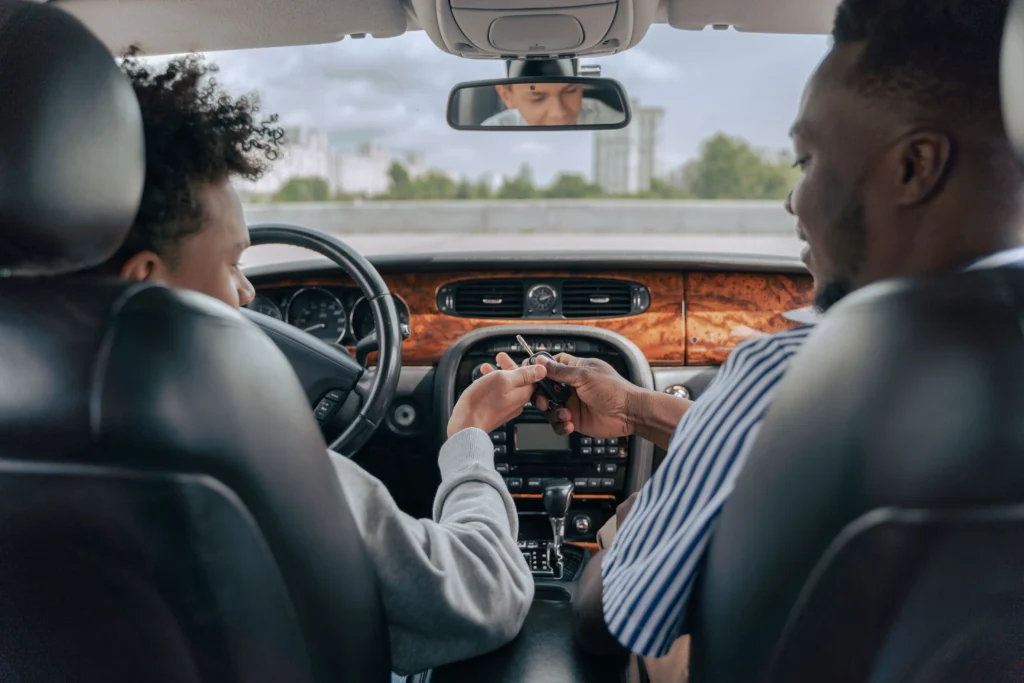
- Search Query: driving instructor helping student practice
- Recommended Source: Unsplash
- License: Free Commercial Use
- SEO ALT: Instructor helping student avoid road test mistakes before the driving exam
Final Checklist Before Your Road Test
Review this quick checklist before leaving for your appointment.
- ✓ Bring all required documents.
- ✓ Inspect your vehicle for working lights, brakes, and signals.
- ✓ Adjust your seat, mirrors, and steering wheel.
- ✓ Fasten your seat belt before starting the vehicle.
- ✓ Stay calm and avoid rushing.
- ✓ Check mirrors frequently.
- ✓ Perform shoulder checks before changing direction.
- ✓ Obey every traffic sign and signal.
- ✓ Maintain a safe following distance.
- ✓ Continue driving confidently, even if you make a small mistake.
Completing this simple checklist can help eliminate many of the most common road test mistakes before they happen.
Conclusion
Passing a driving exam is about much more than completing a series of maneuvers correctly. Examiners want to see that you can drive responsibly, recognize hazards, communicate your intentions clearly, and make safe decisions in real-world traffic.
The majority of road test mistakes are entirely preventable. Consistent practice, proper observation, effective speed management, and a calm mindset can dramatically improve your performance on test day.
Instead of focusing on avoiding failure, concentrate on becoming a safe and confident driver. Those habits will not only help you pass your driving exam but will also keep you and others safe for years to come.
Ready to Pass Your Road Test?
If you’re preparing for your driving exam and want expert guidance, professional instruction can make all the difference. Our experienced instructors provide personalized coaching, mock road tests, and practical lessons designed to help you build confidence and eliminate common driving errors.
Explore our driving classes to find the right training program for your experience level. You can also view our lesson packages or contact our team to schedule your next lesson. To learn more about our instructors and teaching philosophy, visit our About Us page.
With the right preparation and consistent practice, you’ll be well on your way to passing your road test with confidence.